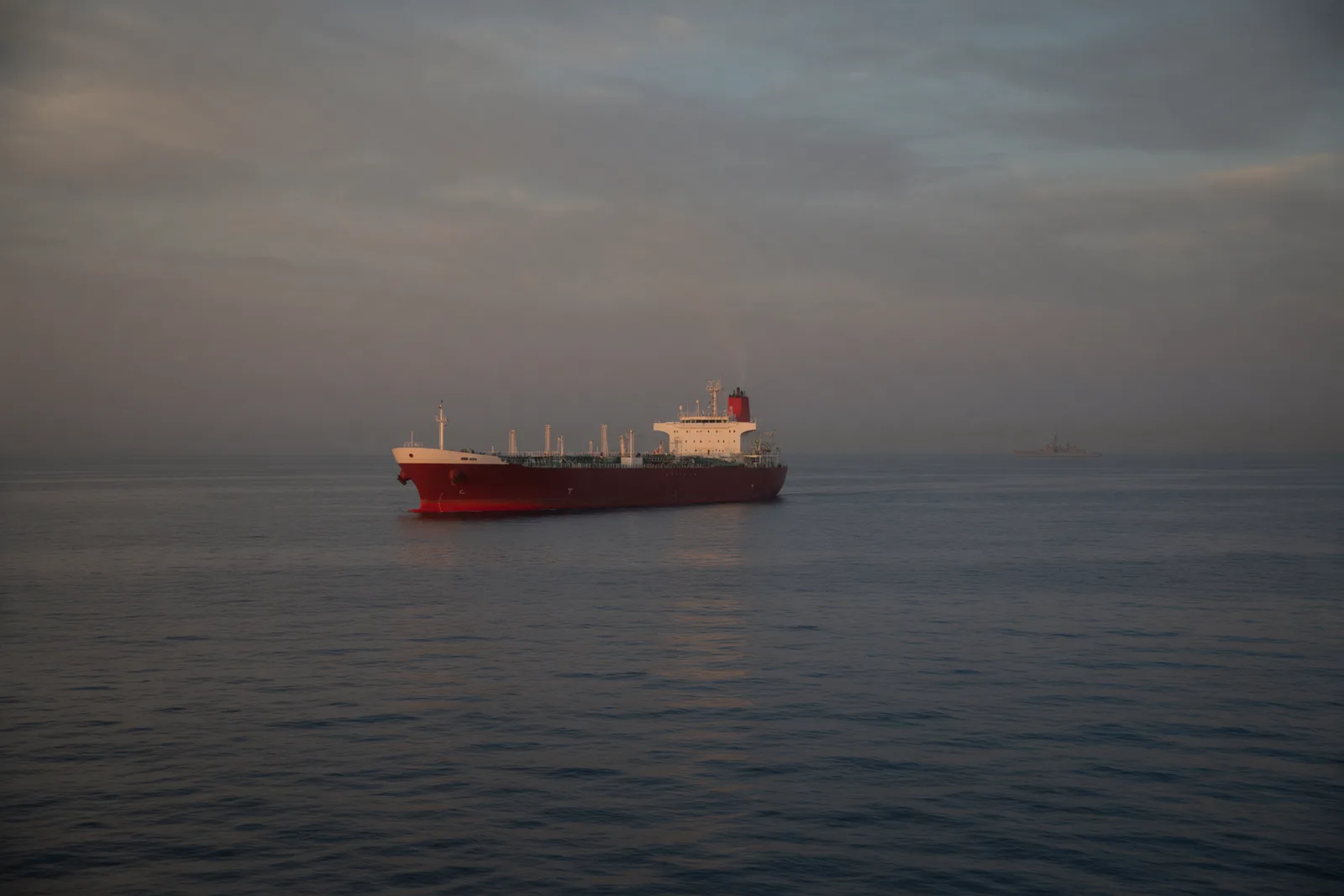
The tanker that caught fire off Oman on Saturday had been hit once before. Open source intelligence analysts tentatively identified it as the Navig8 Messi, an Adnoc-chartered product tanker that was struck in August, repaired, and returned to the same trade lane, The Maritime Executive reported.
That is the detail that separates this weekend from a single incident. The attacks are falling on the same route, and fewer ships are using it.
Key numbers
- 2 tankers reported attacked in the Strait of Hormuz on Saturday, one of them on fire, according to The Maritime Executive
- 8 nautical miles off the coast of Khasab, on Oman's Musandam Peninsula, where the first vessel caught fire
- Single to low double digits daily transits through the waterway, described as below normal and well below the number of escorts seen early last week
- 1999 build year of the Huda, the Iran-linked bulk carrier disabled by U.S. forces on the same day
Crew evacuated, no injuries reported
The first vessel was transiting about eight nautical miles off Khasab when it caught fire. Crew members were evacuated and no injuries have been reported, The Maritime Executive said. Unverified video circulating on social media appears to show a cargo fire burning amidships, with at least two firefighting tugs on scene.
The UK Maritime Trade Operations agency, which collects reports from ships in the region, received a second report the same day. A company security officer said his firm's vessel had been hit by a projectile during an outbound transit of the strait. All crew were reported safe, and no environmental impact was reported.
Also on Saturday, U.S. forces targeted and disabled the Huda, an Iran-linked bulk carrier built in 1999. U.S. Central Command said the crew had ignored repeated warnings and tried to violate the U.S. naval blockade of Iranian ports, and that it had directed the crew to abandon the targeted spaces aboard the vessel before the strike.
Traffic through the strait is below normal
The market mechanism here is physical, not financial. Crude oil, refined products such as gasoline, and gas cargoes leave the Gulf through a single narrow waterway, and the number of ships willing to make that passage sets how much cargo actually moves.
UKMTO describes an Iranian presence in the strait that is constant and active, listing drone overflights, targeted surveillance of merchant shipping and occasional VHF radio hailing of vessels. Under those conditions, transit counts have fallen to between single digits and low double digits a day, The Maritime Executive reported, well below the escorted convoy numbers seen early last week.
Fewer transits mean fewer loaded tankers clearing the Gulf in a given week, and that is the link between an attack on one ship and the price of a barrel elsewhere.
What is confirmed and what is not
The two reports agree that at least two tankers were attacked on Saturday, that one burned, and that the crews are safe. The identity of the burning ship is not confirmed: it rests on open source analysis, and the vessel's owners have not been quoted.
Splash247 places the weekend inside a wider escalation around the strait over the past 72 hours, listing tankers set ablaze, the U.S. strike on a bulk carrier, fresh Iranian warnings about naval mines and explosions reported along Iran's southern coastline. Neither report gives a crude oil price or a move in one.