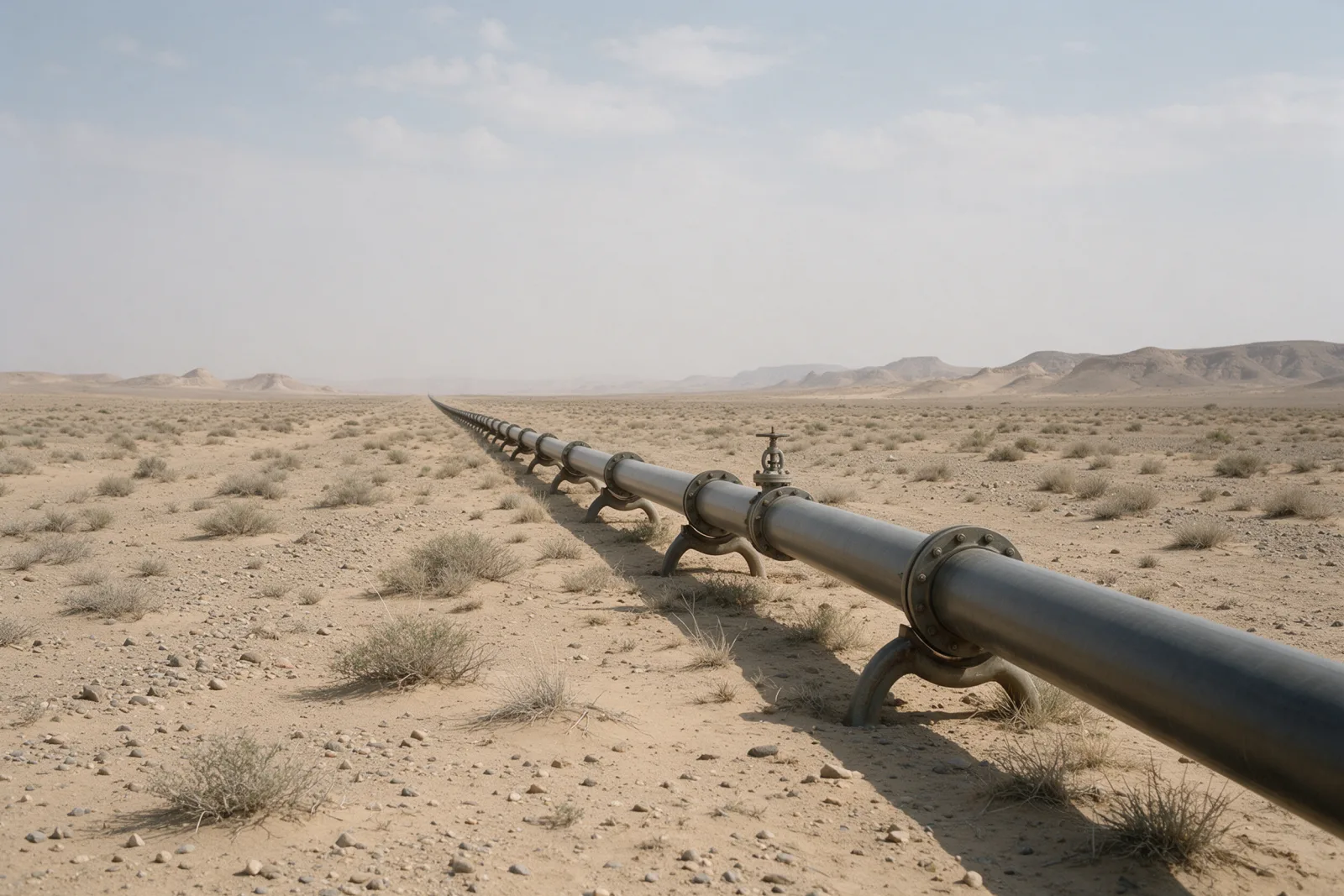
The pipeline that was hit is the one Saudi Arabia built to avoid the Strait of Hormuz. The East-West line carries crude from the Arabian Gulf production hubs across the kingdom to the Red Sea port of Yanbu, and an energy ministry official said the attack on Monday hit it in the Medina region, started a limited fire, and left no casualties and no disruption to operations.
That is the ministry's position on operations. It is not a statement about damage: as OilPrice.com noted, the ministry confirmed operations were unaffected without explicitly saying the line suffered no physical damage. None of the reports I read says who carried out the attack.
Key numbers
- 22.87 million bpd OPEC crude production in October, according to a Reuters survey published Monday, up 1.38 million bpd from September
- 25.48 million bpd what the group's 11 members pumped in February, the last month before the war disrupted Middle East exports and production
- 9.2 million bpd Saudi output in October per a Bloomberg survey, up 970,000 bpd on the month and still about 800,000 bpd below early-year rates
- 1.9 million bpd Iranian output in October per the same Bloomberg survey, down 120,000 bpd and the lowest in that data going back to 1989
Why a pipeline matters more than a barrel count
Yanbu handled the bulk of Saudi export growth in October, according to OilPrice.com. That is what makes the East-West line the sensitive piece of hardware: it is the route that lets barrels reach buyers without passing through Hormuz.
In plain words: crude has to physically travel from the field to a loading port. When the pipeline doing that work is attacked, traders price the chance that the barrels arrive late or not at all, even if nothing stops moving on the day. Here the ministry said nothing stopped moving.
The second thread in Monday's reports pulls the other way. OPEC output has been recovering: the Reuters survey had the increase led by Saudi Arabia, Kuwait and Iraq, while a separate Bloomberg survey put October at 22.8 million bpd, up 930,000 bpd from September and 88% of February levels. Iraq added 140,000 bpd to 4.15 million bpd and Kuwait added 130,000 bpd to 2 million bpd. No tankers have been seen at Iran's Kharg Island since late August, The Maritime Executive and OilPrice.com reported on the same day the pipeline was struck.
The quotas are being rewritten around the war
The war has made the group's pledged increases impossible to deliver. Members covered by the OPEC+ quota deal pumped about 25 million bpd in August against a combined target of 31.01 million bpd, OilPrice.com reported.
After raising quotas every month since April, the group held them steady for October and November, then extended the hold to December. Members are now reviewing how much crude each country can technically produce, a review that feeds into the next ministerial meeting.
The Maritime Executive describes Monday's strike as another one on the same line, so this is not the first time it has been targeted. The reports give no figure for repair work or for barrels lost, because the ministry reported none.
What to watch
- 29 November OPEC ministerial meeting, which is set to decide 2027 output targets
- Ahead of that meeting the members' review of how much crude each country can technically produce