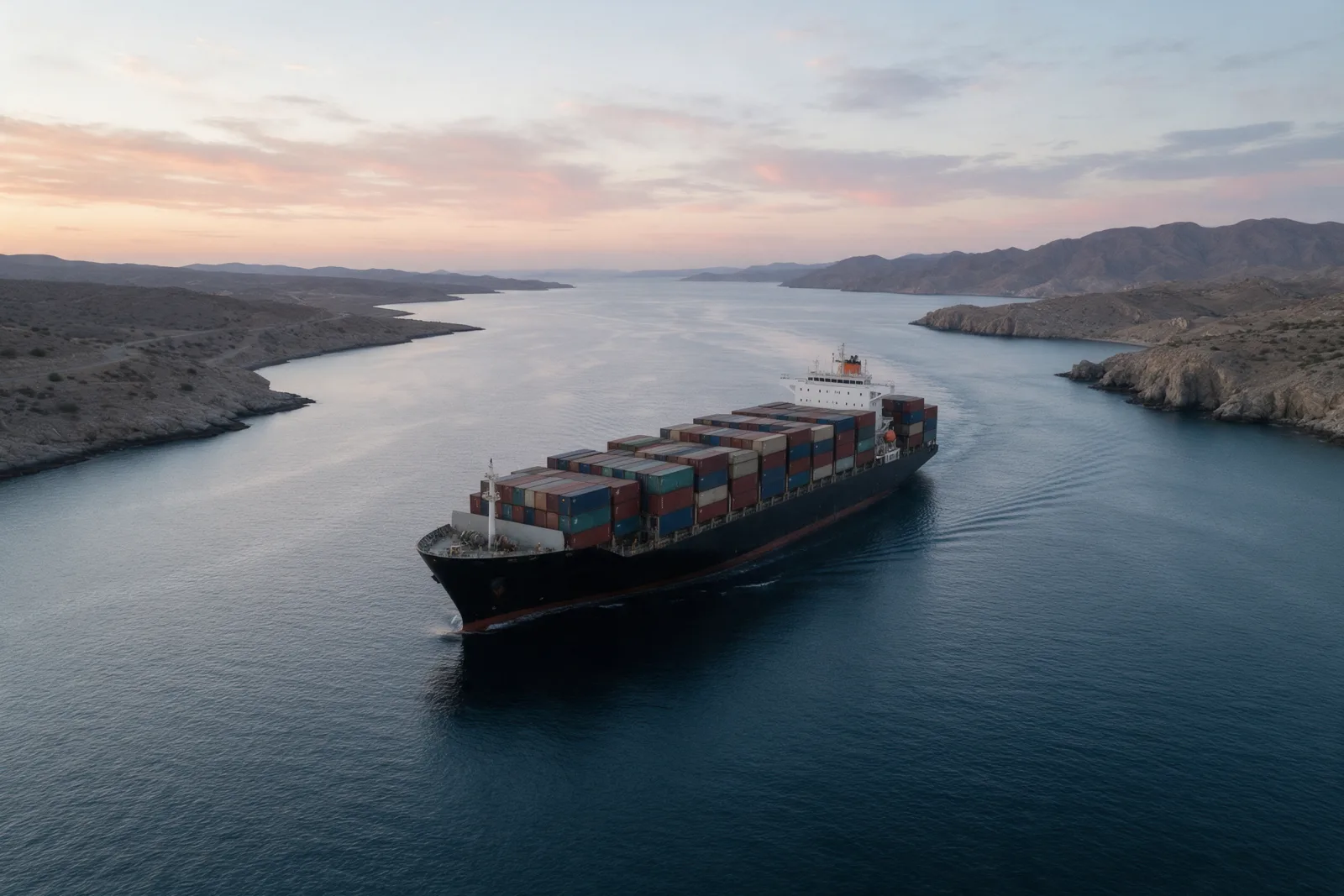
Iran's navy said four oil tankers hit mines and caught fire in the eastern part of the Strait of Hormuz over a single 24-hour stretch. The United Kingdom Maritime Trade Operations agency separately reported on Tuesday that an unidentified projectile struck a tanker in the strait and set it alight, without saying who was behind it, and told vessels to transit carefully and report anything suspicious.
Those incidents sit underneath a week of sharper language from Tehran. Iran's Revolutionary Guards Navy told shipping companies to stay off the United States-backed southern channel through Hormuz, calling it fully closed and a "minefield of fire," according to regional media citing a statement from the force, CNBC reported. Brig. Gen. Mohammad Akrami-Nia, a spokesperson for the Iranian Army, said the strait would stay shut until "the enemy accepts Iran's conditions."
Key numbers
- 3 American aircraft carriers in the Gulf region after the USS Theodore Roosevelt arrived on Sunday, alongside the USS George H.W. Bush and the USS George Washington
- $91.8 Brent crude futures a barrel in Asian trading on Tuesday, down 0.7%
- $85.1 West Texas Intermediate futures a barrel on Tuesday, also down 0.7%
- 6 drones Iran said it fired on Sunday at a United States air-defense radar at Bahrain's Riffa air base, its second claimed attack on the kingdom in three days
The force build-up grew while the price went the other way
The third carrier added firepower close to Iran at the same time as President Donald Trump described the war as winding down. After meeting Qatari Prime Minister Sheikh Mohammed bin Abdulrahman Al Thani last week, Trump said the conflict with Iran could finish "fairly soon" and that it "militarily is effectively over." His messaging has swung in recent weeks between that and warnings of renewed large-scale strikes if a deal is not reached.
Crude did not follow the headlines on Tuesday. Brent, the international benchmark, eased 0.7% to $91.8 a barrel in Asian hours, and WTI gave up the same 0.7% to $85.1.
In plain words: the Strait of Hormuz is the narrow sea passage that tankers leaving the Gulf must use, so threats to traffic there can change what buyers pay for a barrel loaded today. That extra amount is what traders mean by a geopolitical risk premium. It does not move with every statement, and on Tuesday both crude benchmarks closed Asian trading lower rather than higher.
What the reports confirm, and what they do not
I went through both overnight reports, and the shooting, the mines and the carrier movements are stated by named parties: Iran's navy, the United Kingdom's maritime agency, Bahrain's military, which said it intercepted and destroyed several Iranian aerial attacks. Nobody has said who fired the projectile that hit the tanker.
The unverified part is a separate thread. CNN reported on Tuesday that fresh United States intelligence pointed to Iranian planning that could target senior Trump administration officials with a dirty bomb or a chemical weapon in Washington, D.C. CNBC said it could not immediately verify that report, and described the intelligence as Iran building options rather than proof of an imminent attack. A White House spokesperson told CNBC that officials are monitoring threats and that "at this time there are no credible threats to the homeland." Treasury Secretary Scott Bessent moved into military housing last week after Iranian threats.
Secretary of State Marco Rubio condemned the attacks on Bahrain in a call on Monday with Bahraini Foreign Minister Abdullatif bin Rashid Al Zayani and restated Washington's commitment to Gulf partners' security.
The war is nine months old. It started in late February with United States and Israeli attacks on Iran, after which Tehran struck Israel and Gulf states hosting American bases. Indirect talks via Qatar have stalled: Iran wants the United States naval blockade of its southern ports lifted and sanctions removed, while Washington insists Iran cannot hold a nuclear weapon. Ian Bremmer, president and founder of Eurasia Group, told CNBC that the assumption Tehran will eventually buckle under economic pressure and take better terms is a "misread of the Iranian leadership and their capacity to resist."