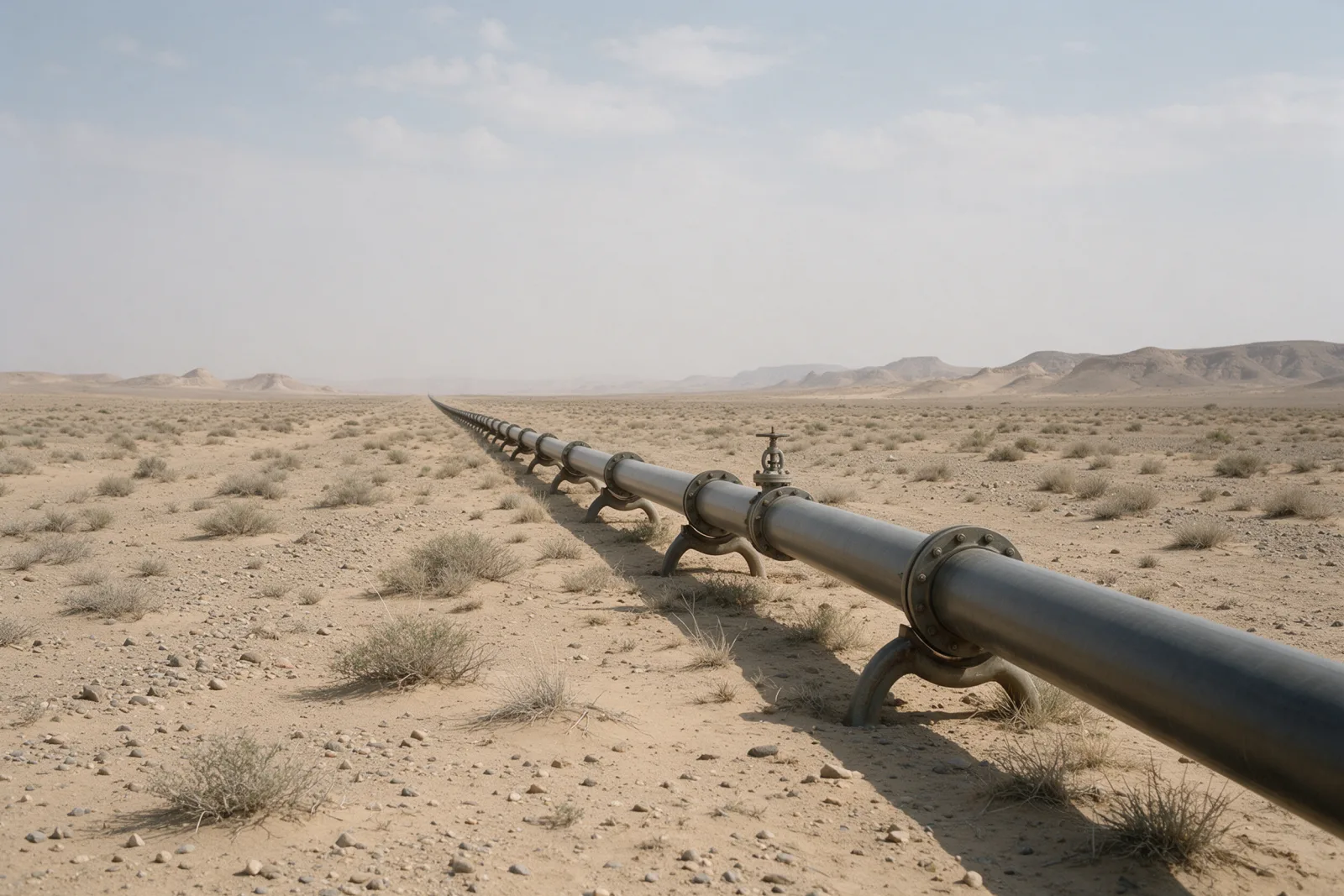
This is the second valve closure in two months on the line that carries crude from Sharara to the Zawiya export port, according to OilPrice.com. Sharara is Libya's biggest oilfield, and that pipeline is how its barrels reach the coast.
The National Oil Corporation (NOC), Libya's state oil company, said on Monday that the closure cut about 350,000 barrels per day (bpd). It lands on top of a separate shutdown at the Hamada field, where an armed group has kept a pipeline closed for more than 20 days.
Key numbers
- 350,000 bpd of crude production halted after the valve closure on the Sharara pipeline, NOC said
- 365,000 bpd Libya's total daily production loss from the two closures together
- 15,000 bpd the output lost at Hamada, where the blockade has run about three weeks
- 302,778 barrels cumulative Hamada losses since that blockade began, which NOC valued at $30.8 million at current average crude prices
One valve can take a field offline
A pipeline shutdown is not damage to the field. The crude is still in the ground and the wells are intact; what has stopped is the only route the barrels have to the export terminal. When the outlet is blocked, production has to be cut back behind it.
NOC said the loss comes while the country faces what it called a critical economic situation. Its board called on the Petroleum Facilities Guard and government authorities to protect oil infrastructure, prevent further disruptions, and work to reopen both pipelines.
In plain words: crude oil prices respond to how many barrels are actually available to buyers this month, not to how much oil a country holds underground. A blocked pipeline removes those barrels immediately, which is why a single valve in the desert can matter to a market as large as oil. When the valve reopens, the barrels come back just as quickly.
What the reports confirm, and what they do not
I went through both reports on the shutdown, and the figures come from NOC itself: the 350,000 bpd at Sharara, the 15,000 bpd at Hamada, and the 365,000 bpd combined. Quantum Commodity Intelligence carried the same 365,000 bpd total.
Neither report names the group that closed the Sharara valve, beyond describing it as an outlaw group, and neither gives a date for a restart at either field. There is no comment from the Petroleum Facilities Guard in the reports I read.
Neither report gives a figure for how crude prices traded after the announcement. OilPrice.com notes only that the Libyan outage follows disruptions in the Middle East, after crude flows through the Strait of Hormuz recovered in recent months.