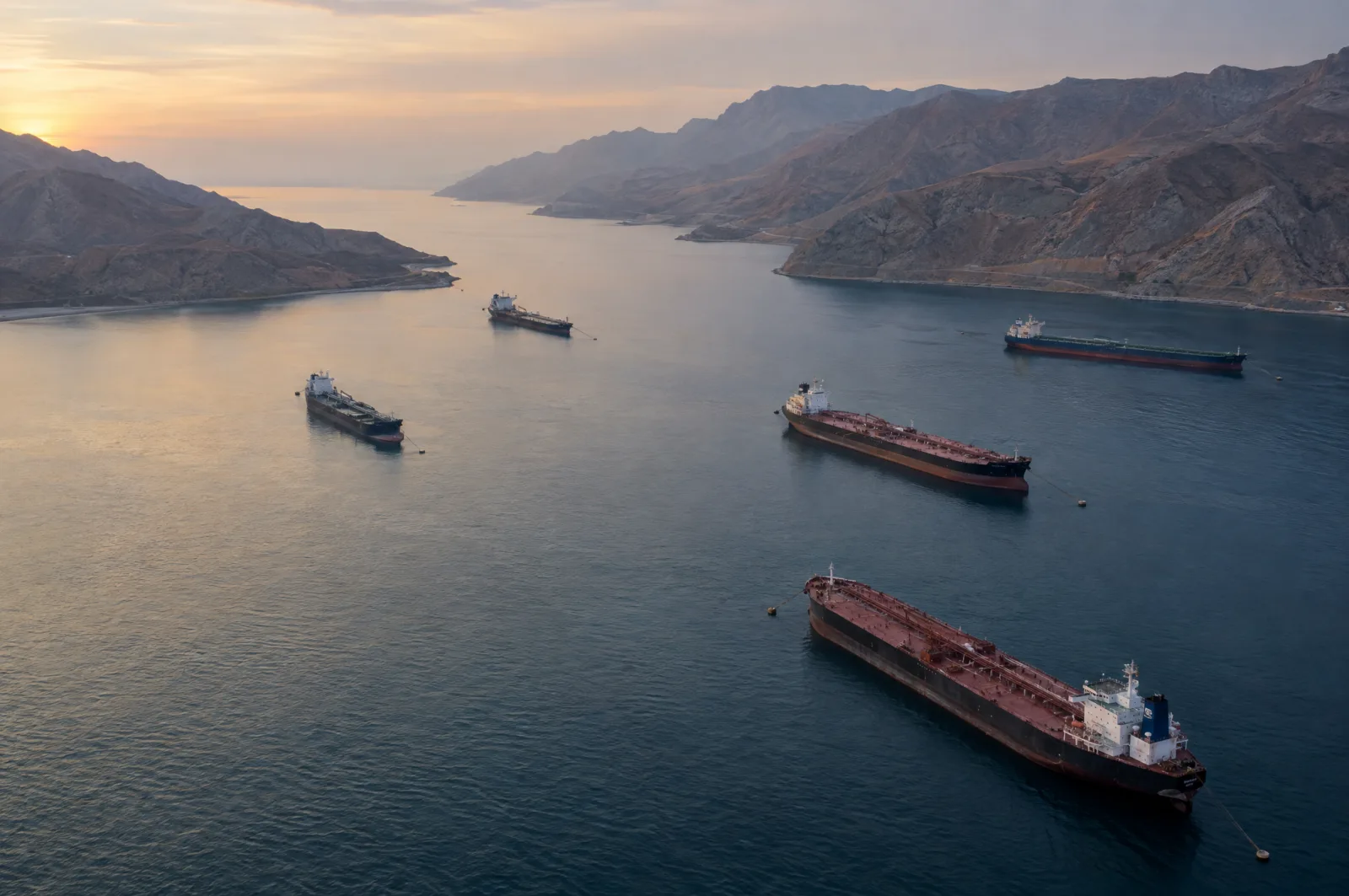
Neither vessel was named. No flag, owner or crew detail appears in the reports I went through, and no maritime authority has stood behind the account. What the Revolutionary Guard Corps did give, in a statement read out on Iranian state television on Friday, is a location for each ship: one inside the Strait of Hormuz, the other to the east of it.
The claim also runs straight into what the United States military has been saying. US Central Command stated recently that the waterway has been swept clean of mines, according to the same report.
Key numbers
- 2 tankers described by the IRGC on Friday as hitting mines and catching fire in or near the strait
- 5 tankers and a tugboat reported burning by Iranian media on Thursday, in incidents described the same way
- About a fifth of the oil the world consumes normally passes through the strait
- 1.5 billion barrels shipped out by Gulf countries via Hormuz since the summer with US help, Central Command said last month
What Iran says happened, and what nobody has confirmed
In the Guard Corps version, carried by Hellenic Shipping News, citing AFP, the two ships were leaving the strait by a route Tehran treats as off-limits, with their navigation and identification equipment switched off and with backing from the American military. The statement says both stopped after running into mines and burning.
That is one side's account of events at sea. The report is explicit that officials in the maritime world have verified none of these fires, Thursday's reported five included. A separate account of a tanker burning after a naval mine strike was published by lankanewspapers.com, again on Iran's say-so. Earlier in the week, Iran reported four tankers destroyed by mines near the same passage.
So the pattern being reported is consecutive days of burning ships in the world's busiest oil chokepoint, every instance sourced to one party, and contradicted in part by the US military's statement that the mines are gone.
Why a narrow waterway sets the tone for crude
Since the Middle East war started on 28 February, Tehran has tried to hold down traffic through the strait. Washington answered with a blockade of Iranian ports and naval escorts for tankers making the passage, and Central Command has put numbers on that effort.
In plain words: the Strait of Hormuz is a narrow sea lane that most Gulf crude has to cross to reach buyers. There is no quick way around it for the volumes involved. When ships are reported on fire inside it, the question for the oil market is not the individual cargo but whether the route stays usable, which is why these claims travel far beyond shipping desks.
The reports give no casualty information for any of the vessels, and no salvage or rescue detail. Until an owner, a flag state or a maritime authority speaks, the count of damaged ships rests entirely on Iranian statements.