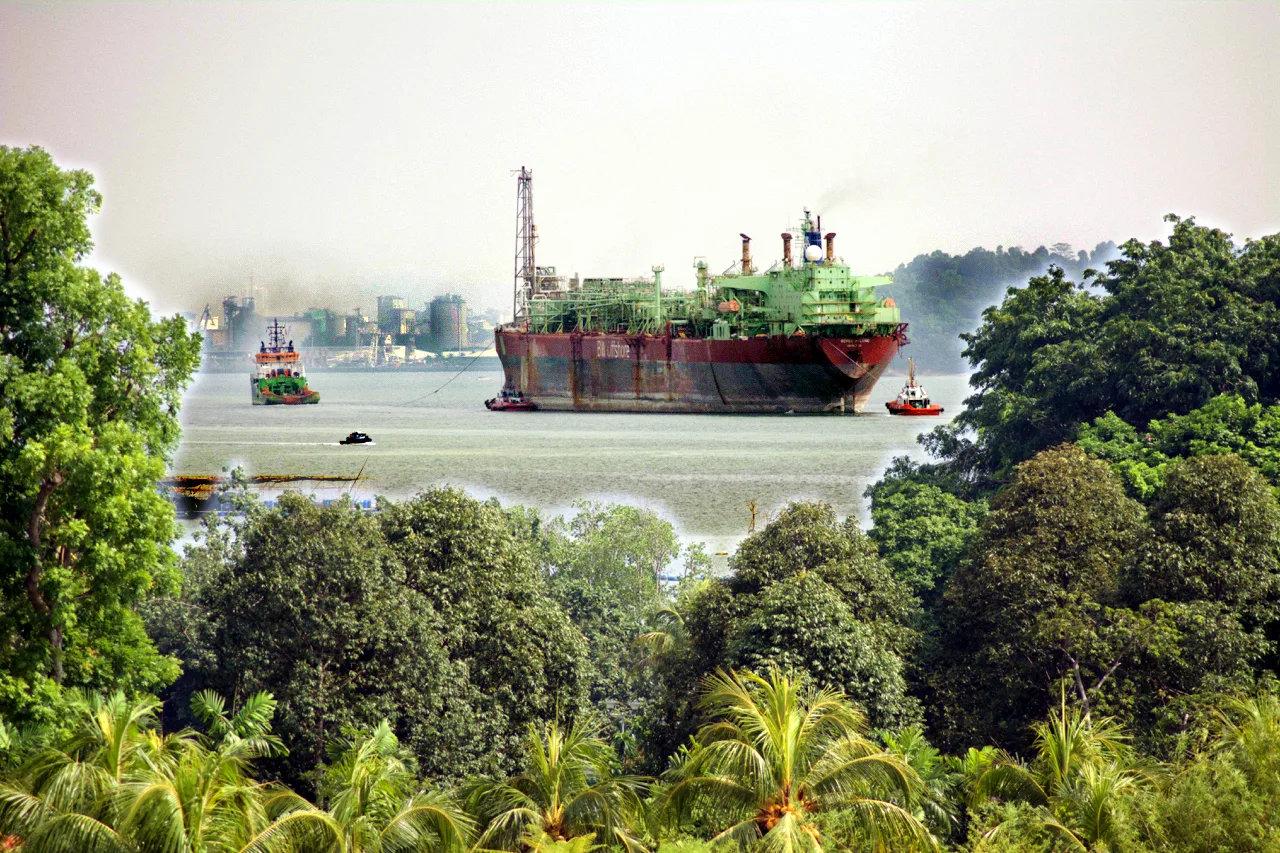

Two supertankers hit naval mines on Friday while trying to use what the IRGC Navy described as an unauthorized southern route through the Strait of Hormuz, the Iranian force said in a statement carried by investingLive. It reported explosions and fires. The account comes from one side of the war and has not been independently confirmed; neither of the reports I read offers a second version of it.
That is the setting for the warnings exchanged this week by Washington and Tehran, and crude moved with them. Brent traded at $117.27, its highest level since May, while WTI was $4.21 higher at $103.74, according to investingLive.
Key numbers
- $117.27 Brent crude, the highest since May
- $103.74 WTI crude, a gain of $4.21 on the day
- 2 supertankers the IRGC Navy said struck mines near Hormuz on Friday, not independently confirmed
- Late February when the US-Iran war began, according to Hindustan Times
Trump points to a further operation
Speaking to reporters on Thursday, the US president said he might "go a little further" to keep Iran from obtaining a nuclear weapon, Hindustan Times reported. At a campaign rally at Sioux Gateway Airport in Sioux City, Iowa, he said the conflict with Iran would be finished soon, "one way or the other".
In separate rally remarks reported by investingLive, he said the US may carry out "another operation" against Iran. The same report recalls that he had earlier said there would be no attacks before the midterm elections.
Tehran's threat names civilian targets
Iran has warned that if US and Israeli strikes on its territory resume, its response would reach beyond American military bases to airports, pipelines and other civilian infrastructure in neighboring West Asian countries. That warning was reported by The Wall Street Journal and relayed by Hindustan Times.
The first phase of the war gives a measure of what that means. Iranian attacks caused heavy damage to US air bases, embassies and the headquarters of the US 5th Fleet in Bahrain, and struck energy and industrial facilities in the United Arab Emirates, a large gas plant in Qatar, and airports in Dubai, Kuwait and Bahrain. Ships have been attacked and civilians killed since the fighting began.
Tehran says any new round would be more damaging, at a time when US and Arab militaries are short of air-defense interceptors, with Israeli stocks also under strain, the WSJ report said. Analysts estimate Iran holds hundreds to thousands of ballistic missiles, and US and regional officials believe limited production has restarted using stockpiled components and underground sites. Foreign minister Abbas Araghchi wrote in the Financial Times that renewed attacks would put civilian lives, the wellbeing of regional states and the global economy at great risk.
The strait is still blocked
The Strait of Hormuz remains closed and efforts toward a peace deal are deadlocked, Hindustan Times reported. That is the part of this story that touches the oil market most directly.
In plain words: a strait is a narrow sea passage, and tankers loading at Gulf ports have to pass through this one. When the route is blocked or ships in it come under attack, barrels that have already been produced cannot reach refineries on schedule, and buyers compete harder for the cargoes that are already at sea. That competition is what shows up in the crude price.