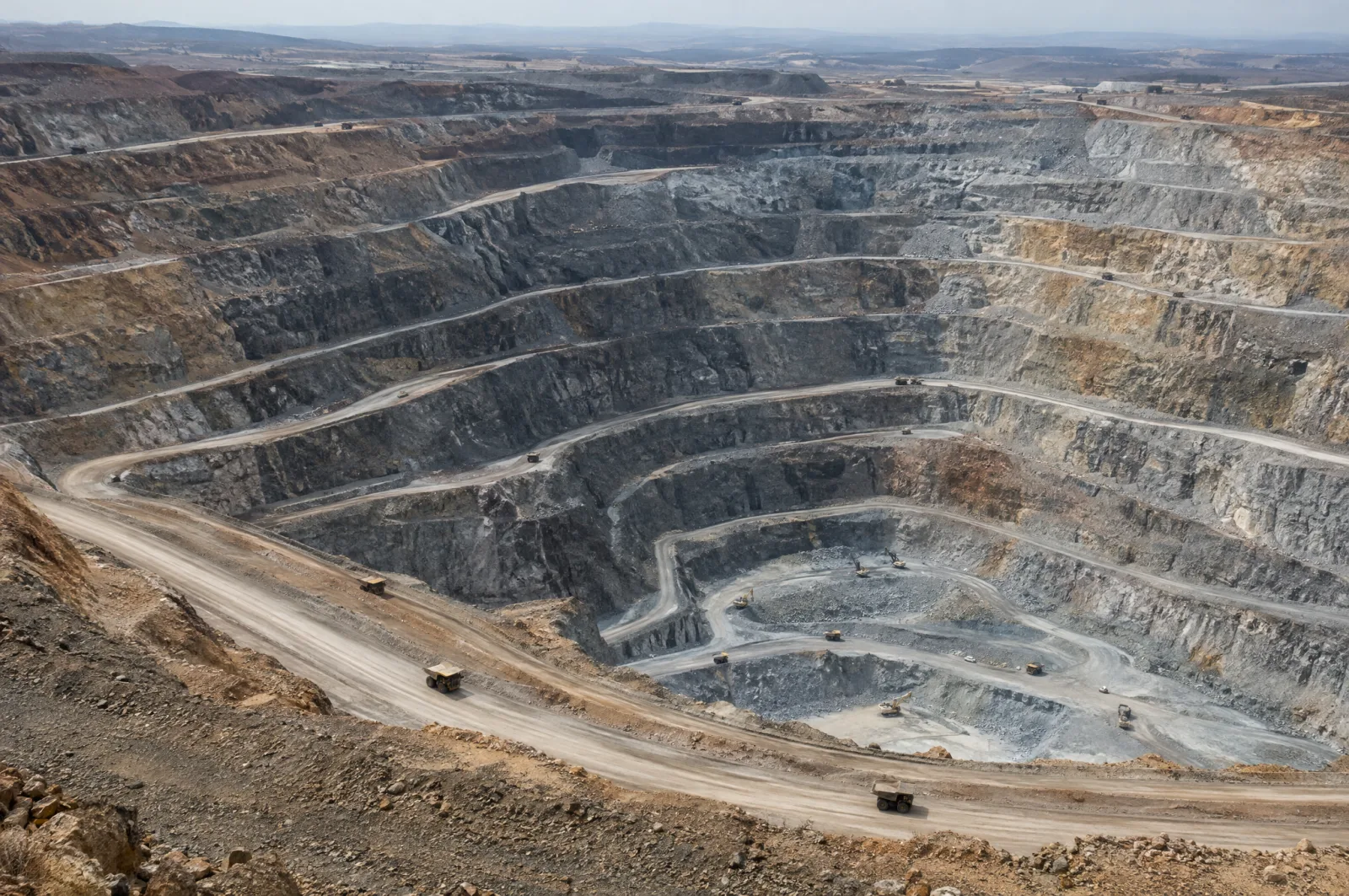
The cobalt has not disappeared. Glencore is still digging up the mixed ore in the Democratic Republic of Congo, taking the copper out of it, and leaving much of the cobalt sitting in solution instead of turning it into saleable hydroxide. Material held that way is kept out of the production figures altogether, the company said in its third-quarter update on Thursday.
That is the whole reason the headline number halved. It is a decision about when to process metal, not a sign that the orebody or the mines are failing.
Key numbers
- 13,700 tonnes own-sourced cobalt in the first nine months of 2026, against 28,500 tonnes in the same period of 2025
- 3,500 tonnes cobalt in the third quarter, 20% below the previous quarter
- 11,600 tonnes cobalt from the African Copper division through September, 56% lower year-on-year
- £5.31 Glencore's share price in London on Thursday, 1.9% lower on the day, for a value of about £62.4 billion
Why the metal is being left in solution
Congo, the largest cobalt-producing country, halted exports in February 2025, after prices had sunk to their lowest in nine years. The ban gave way to a quota system in October of that year, with annual export limits set for 2026 and 2027, and the restrictions run until at least the end of 2027. The two reports I read agree on that timeline.
For a producer, an export quota caps what can be shipped, not what can be mined. Glencore said holding cobalt in solution trims processing costs now, and that it expects to capture the value later, as the export rules change. Kamoto Copper Company and Mutanda already hold enough cobalt stocks to cover their near-term export allocations, according to the company.
One thing is not disclosed: how much metal is being held back. Neither The Northern Miner nor Mining.com reports a volume, or a date for converting it. That leaves the size of the eventual supply overhang unknown, as Mining.com noted.
In plain words: when a government limits how much of a metal can leave the country, miners that cannot ship it have a choice between finishing the processing and storing the product, or stopping halfway and storing the raw material. Glencore has chosen the second route for part of its cobalt. The metal still exists, so it can return to the market later, which is why traders follow quota deadlines as closely as production numbers.
Copper went the other way
Own-sourced copper output reached 598,600 tonnes through September, up 3% from 583,500 tonnes a year earlier, The Northern Miner reported. Stripping out the closed Mount Isa copper mine and the sold Kidd operation, the comparable gain was 12%. Higher mining rates and better grades in African Copper, plus richer ore at Antamina in Peru, made up for softer output at Antapaccay and Collahuasi.
Glencore kept its 2026 copper guidance at 810,000 to 870,000 tonnes and said it should land near the bottom of that band. Steelmaking coal fell 13% to 21.5 million tonnes through September, held back by throughput and yields at Elk Valley Resources in British Columbia, and is tracking to the low end of its 30 million to 32 million tonne target. Energy coal was little changed at 73.9 million tonnes, from 73.5 million.
The ferrochrome smelters are coming back: Boshoek in September and Wonderkop in October, after Lion earlier, lifting attributable ferrochrome output 29% from the second quarter. Chief executive Gary Nagle called the quarter a strong production performance, with the main assets broadly in line with guidance. The company repeated its own forecast of more than $5 billion in full-year adjusted earnings before interest and taxes from its marketing business.
What to watch
- End of 2027 the earliest point at which Congo's cobalt export restrictions are set to run to, according to both reports
- Fourth quarter of 2026 the period Glencore's annual copper, coal and zinc guidance ranges are measured against