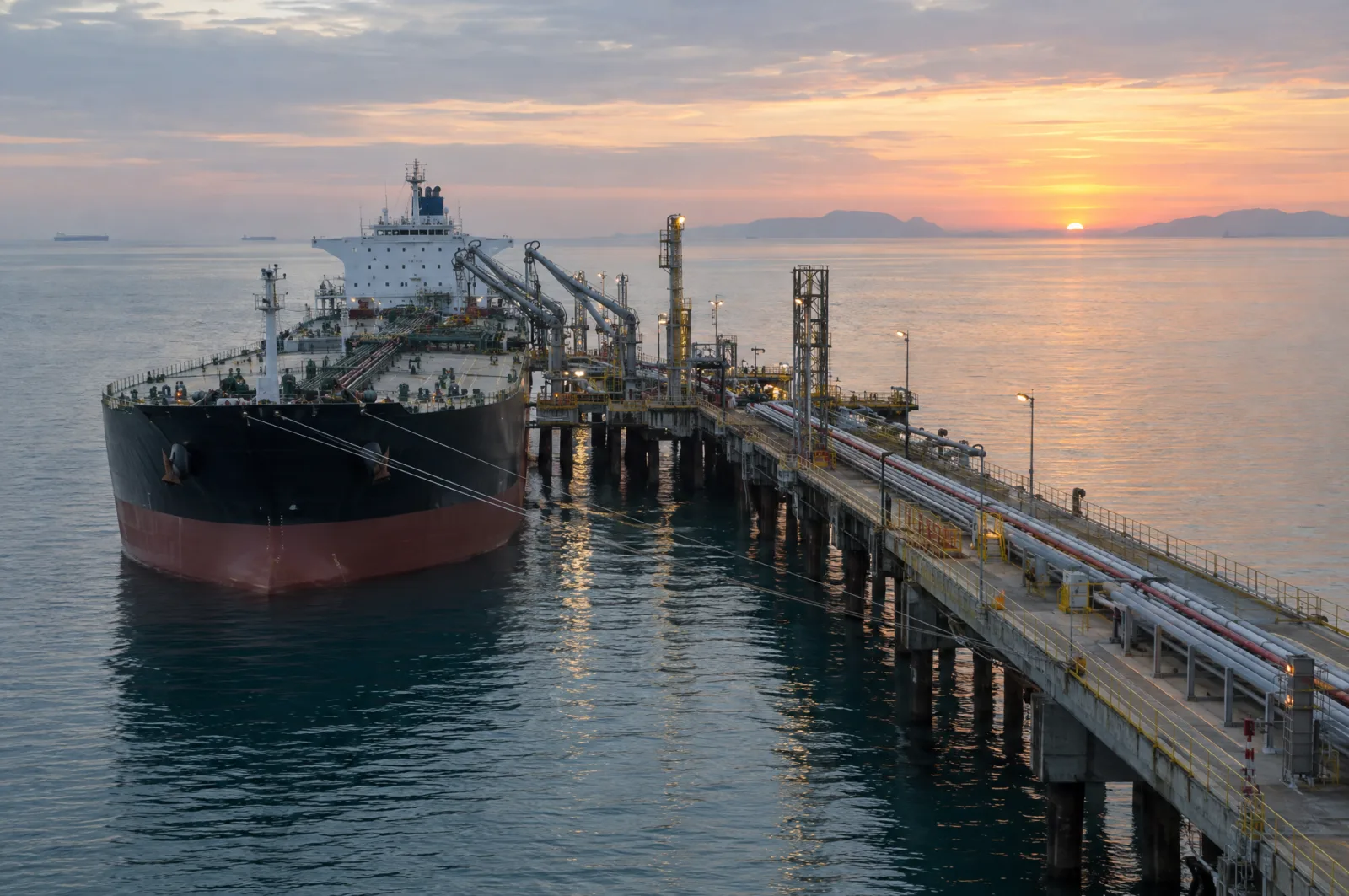
The fire at Ust-Luga was large enough to be seen from neighboring Estonia, and NASA's FIRMS satellite fire-detection system picked it up on its last overhead pass, according to The Maritime Executive.
Three port workers were injured. The strike also triggered an emergency shutdown of a transformer substation and disrupted power supplies at the port, Splash247 reported.
Key numbers
- 700,000 barrels per day of petroleum handled at Ust-Luga, which together with the nearby Primorsk terminal handles the majority of Russian Baltic oil exports
- 3 port workers injured in the overnight attack, according to the regional governor
- 150 drones the governor claimed were shot down, a figure not independently confirmed
- 20 million tons of crude a year at the Kirishi refinery, hit last weekend, about 7% of Russia's refining capacity
What Russian officials have confirmed
The regional governor, Drozdenko, confirmed the attack in a statement on Russian social media early Wednesday, saying several drones struck the port area overnight Tuesday. He said three workers were injured and claimed that 150 drones had been shot down. The regional airport was temporarily closed as a safety precaution.
The two reports describe his post differently: The Maritime Executive calls him the governor of the St. Petersburg region, Splash247 the governor of the Leningrad region. Both name him as the official who confirmed the strike.
Neither report says how much of the terminal was damaged, whether loadings were suspended, or how long any repairs would take. Neither records a move in crude prices.
Ust-Luga is where oil leaves Russia, not where it is refined
Ust-Luga is an export facility handling about 700,000 barrels per day of petroleum, The Maritime Executive reported. Russian grain exporters have also begun using the Baltic port as a backup after repeated Ukrainian attacks on Russian grain shipping in the Black Sea.
In plain words: a refinery turns crude oil into fuels; an export terminal is the dock and tank farm where oil is pumped onto ships. Damage at a loading terminal interrupts the route barrels take to buyers abroad, while damage at a refinery changes how much fuel a country produces. That is why traders treat the two as different events.
The port has been hit repeatedly this year
Ust-Luga was struck in March and again in September, according to The Maritime Executive. The March campaign ran for five nights in a row and caused damage that was not disclosed.
Ukraine has systematically targeted Russian petroleum infrastructure for more than a year, concentrating on oil loading ports and refineries. Over last weekend, drones hit and damaged the Kirishi refinery near St. Petersburg, Russia's second-largest. A monitoring account quoted by The Maritime Executive put the plant's capacity at 20 million tons of crude a year, roughly 7% of Russia's total refining capacity, and said earlier strikes in May and September had forced it to suspend operations.