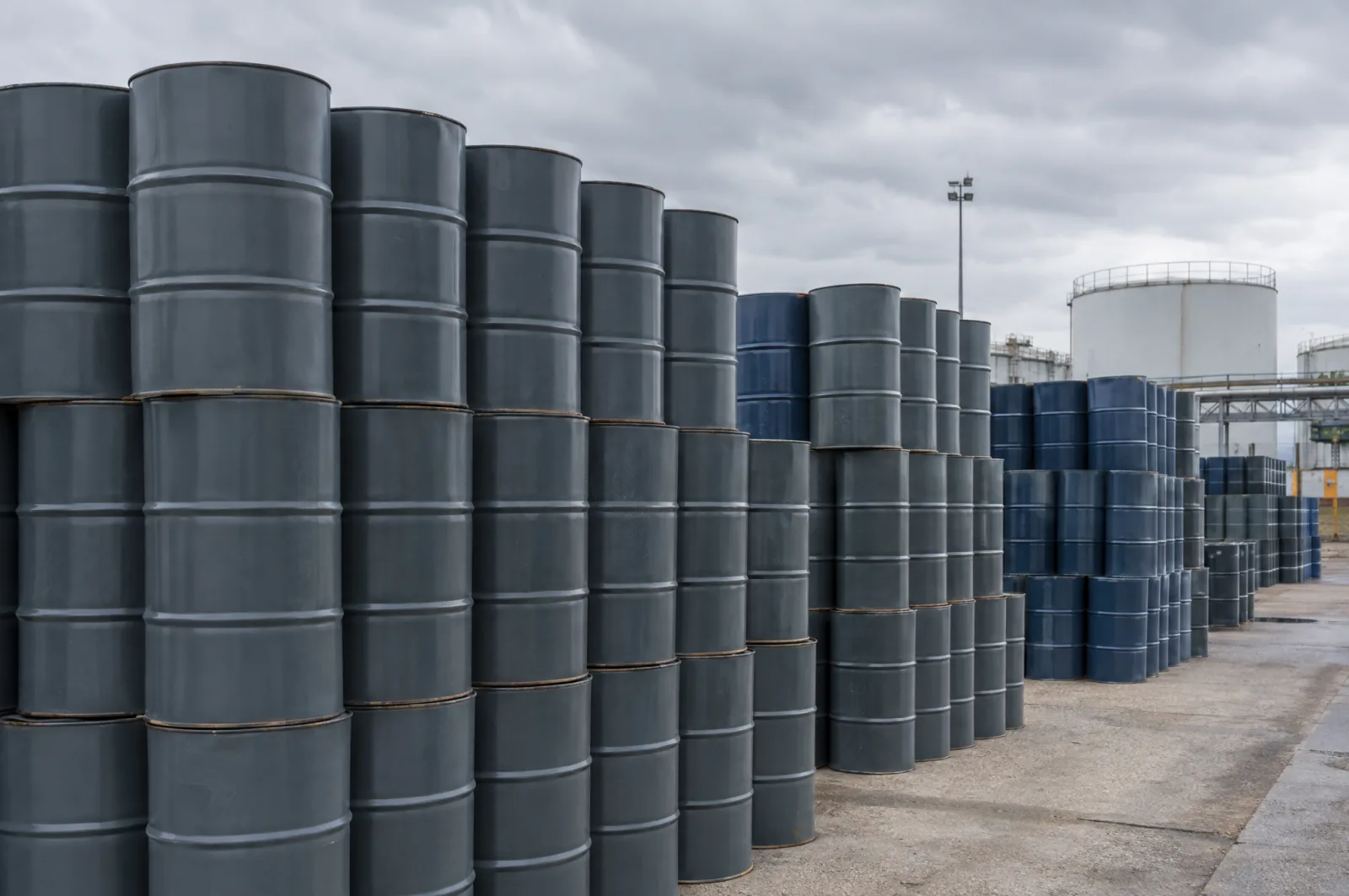
Saudi authorities have not confirmed that any missile reached the refinery itself. OilPrice.com reported that a fire near Saudi Aramco's installations at Ras Tanura was brought under control after an attack in the area early Tuesday, and that no independently verified evidence of heavy damage or of a halt to operations had emerged.
So the market is pricing a claim, not a confirmed outage. None of the reports I went through contains an official Saudi account of the refinery's condition, and the extent of any damage is still described as unclear.
Key numbers
- $115.59 Brent crude on Wednesday, up $1.50 or 1.32% on the session, according to CNBC
- $101.37 West Texas Intermediate on Wednesday, up $1.47 or 1.47%
- 550,000 barrels per day the refining capacity of the Ras Tanura complex the Houthis said they hit
- 2.03 million barrels the fall in US crude inventories in the week to 23 October, estimated by the American Petroleum Institute
A claim on one side, silence on the other
The Houthis said on Tuesday that a ballistic missile struck the Ras Tanura refinery, Saudi Arabia's largest. They also claimed a direct hit on the Defense Ministry in Riyadh and strikes on military aircraft. OilPrice.com reports that neither of those claims has been verified.
The wider wave of attacks is better documented. Saudi officials said they shot down three ballistic missiles aimed at the Eastern Province and four drones headed for the south of the kingdom on Tuesday. Two more missiles were intercepted over Riyadh, where falling debris damaged a building, a construction site and a vehicle, according to Saudi Civil Defense statements carried by the Associated Press and cited by OilPrice.com.
Why Ras Tanura sits at the center of this
Ras Tanura is not only a refinery. It pairs that 550,000 barrel-per-day plant with a major export terminal on the Persian Gulf, which is why OilPrice.com calls it the critical element of the latest attacks.
In plain words: an export terminal is where crude is loaded onto tankers for shipment abroad. A refinery turns crude into fuels. When one site does both, damage there can interrupt the barrels a country ships out as well as the fuel it makes, so buyers treat a threat to it differently from a threat to an inland plant.
The move also reverses part of Tuesday's drop. Crude fell nearly $2 that day on hopes that talks between Saudi, Turkish, Pakistani and Iranian officials would produce something. Those hopes did not survive the next 24 hours.
Iran, the midterms and an Israeli stalemate
CNBC reported that President Trump, speaking at a campaign rally in Texas on Tuesday, said the war with Iran would end on his terms and that Tehran must never be allowed a nuclear weapon. He had said earlier that he was still choosing between a deal and further military action.
The Wall Street Journal, cited by OilPrice.com, reported that Washington has told several Gulf Arab states to prepare for a short and intense military campaign after the 3 November US midterm elections.
In Israel, preliminary exit polls pointed to a stalemate, with neither Prime Minister Benjamin Netanyahu nor his challenger Gadi Eisenkot near the 61 seats needed in the 120-member parliament, CNBC reported. Long coalition talks would leave Israel's approach to Iran unsettled.
US inventories added a second, smaller push. The API's estimated 2.03 million barrel crude draw for the week to 23 October came alongside higher gasoline and distillate stocks.
What to watch
- Wednesday: the EIA weekly inventory report, the official count against the API's estimate
- 3 November: the US midterm elections, the date named in the Wall Street Journal report cited by OilPrice.com