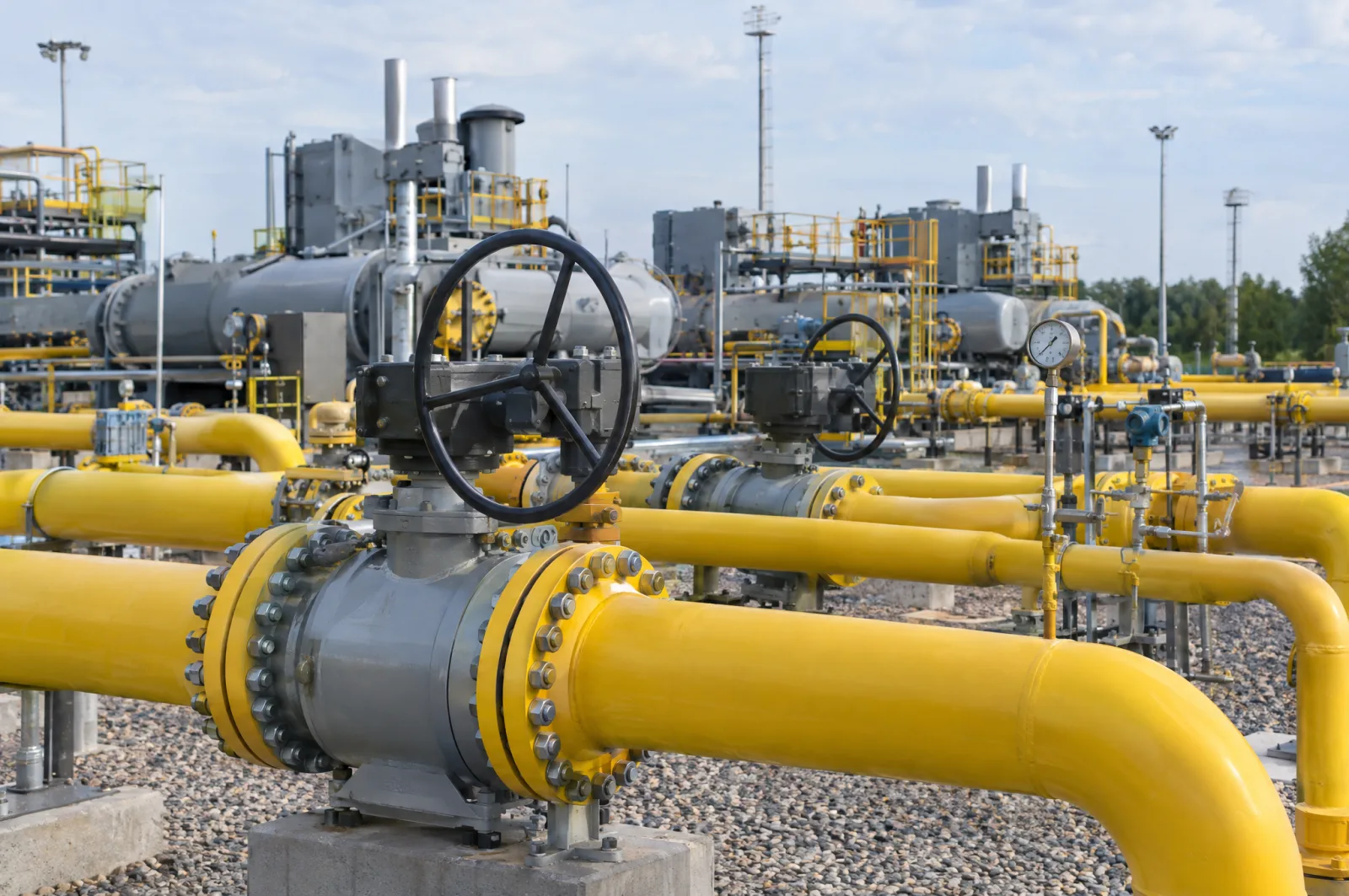
Most of the money in this proposal would not build anything new. Of the $5 billion that Global Energy Markets (GLENMAR) attaches to a five-country gas loop across Central Asia, $2 billion covers fresh construction and $3 billion covers modernization and digitalization of lines already in the ground, according to the project description reported by EconoTimes.
That split says what the scheme is for. It is about moving gas around the region more freely, not about producing more of it. GLENMAR co-organizes the Central Asia Oil and Gas Forum; the loop would tie together the transmission grids of Kazakhstan, Kyrgyzstan, Tajikistan, Turkmenistan and Uzbekistan. Euronews also covered the proposal.
Key numbers
- $5 billion GLENMAR's estimate for the loop, divided into $2 billion of new build and $3 billion of upgrade work
- 3,000 kilometers of new or refurbished line in GLENMAR's description; writing in Petroleum in February 2026, Global Gas Centre adviser Askar Ismailov put the route at 3,000 to 3,500 kilometers and the preliminary bill at $4 billion to $5 billion
- 24.2 billion cubic meters of Uzbek gas produced in January-August 2026, against 28.9 billion a year earlier, a drop of roughly 16.3%, per the country's National Statistics Committee
- 126.377 million cubic meters of Uzbek gas imported by Tajikistan in the first half of 2026, reported by its Ministry of Energy and Water Resources
The existing network was built to send gas the other way
Ismailov's case rests on the Central Asia-Center system, laid down between 1967 and 1985 to push gas northward out of the region. He writes that it can be run in reverse, but because the hardware was engineered for one direction, backward flows are weaker and harder to adjust.
A loop, in his argument, would hand Kazakhstan and Turkmenistan extra routes for exports while giving the three smaller grids steadier deliveries. The source is explicit that these are projected gains rather than confirmed ones.
In plain words: a long-distance gas pipeline is not a two-way street by default. Compressors and valves are placed to push gas one way, so reversing the flow usually means slower throughput and less room to switch supplier or buyer when conditions change. Connecting several national grids in a ring is a way around that, because gas can reach a neighbor by more than one path.
What the paperwork leaves open
None of the documents behind this proposal settles the basics. No feasibility study has been finished, on Ismailov's own account, and he described his cost range as a broad planning figure.
The two route lengths also sit side by side without reconciliation: GLENMAR's 3,000 kilometers against Ismailov's 3,000 to 3,500. Nothing in the material explains whether the scope changed between the two.
And there is no financing picture. GLENMAR breaks the $5 billion down by type of work, not by who pays, so the share falling to each government or company is unknown.