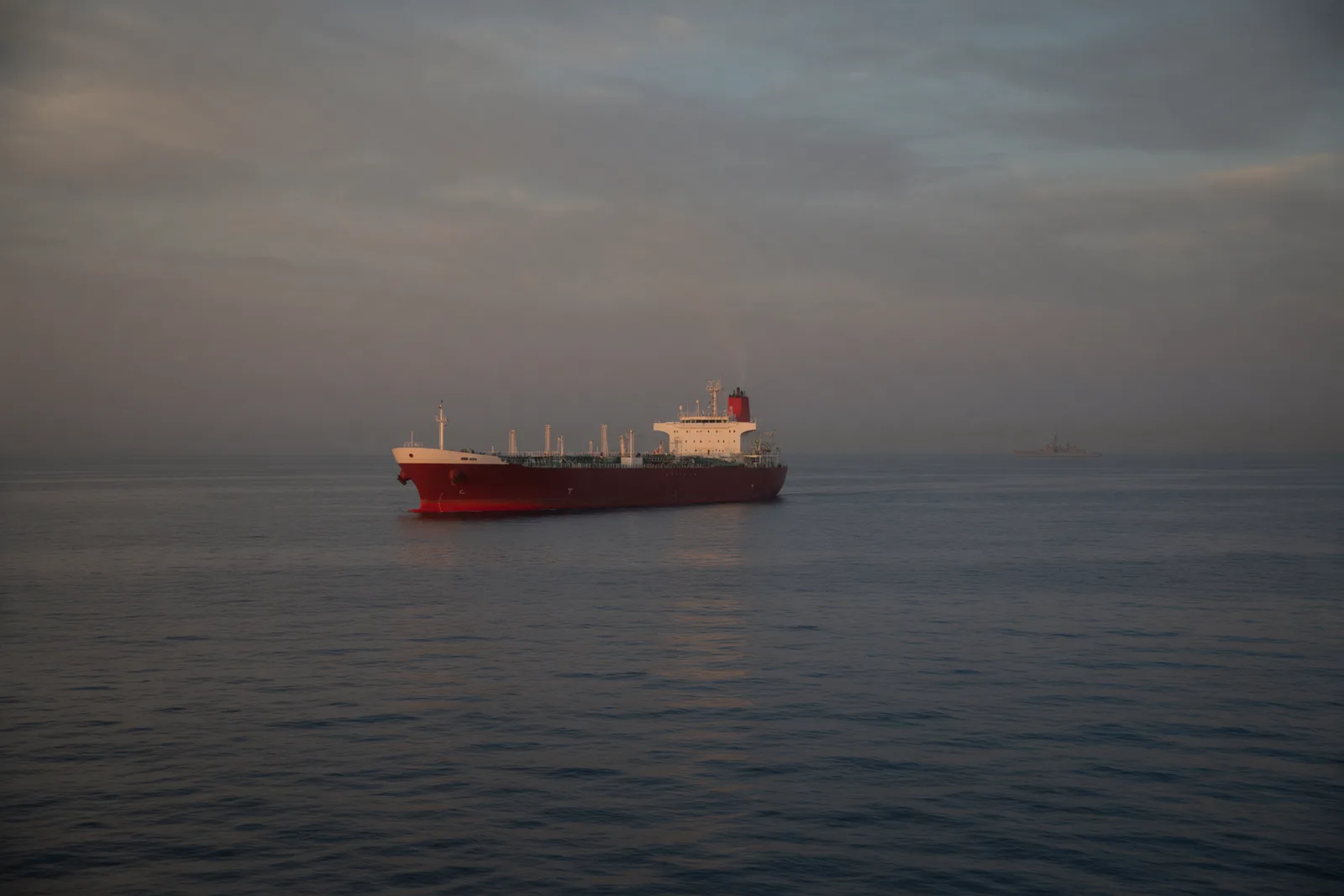
For the first time, the body Iran set up to police crossings of the Strait of Hormuz has aimed a warning at a single named shipping company, The Maritime Executive reported. The company is Sinokor, and the authority says at least seven of its ships have already been dealt with. The Maritime Executive reports that those ships were attacked while crossing by the southern channel.
What follows is undefined. Iran's Persian Gulf Strait Authority gave a start date of November 1 and the words "legal action", and little else: no venue, no penalty, and no statement that passage will be stopped.
Key numbers
- Nearly 40% of the crude that left the Strait of Hormuz last month moved on Sinokor ships, more than the next three owners combined, Bloomberg reported, citing intelligence firms and maritime databases
- At least 7 Sinokor vessels have already faced what the authority called enforcement measures, by its own account
- 125 vessels on the latest published version of the authority's non-compliance list, against the 45 tankers it named in August
- 138 commercial vessels redirected by US forces as of October 17 under the US blockade on Iran-linked shipping, according to US Central Command
One owner moves a large share of Gulf crude
Sinokor, based in South Korea, has spent the year buying ships. Veson Nautical counts more than 70 crude tankers acquired in 2026, lifting the owned fleet to between 80 and 90 vessels with many more chartered in, The Maritime Executive reported, adding that the purchases were reported to be financed by MSC Mediterranean Shipping Company.
Much of that tonnage runs shuttle work: carrying crude out of Persian Gulf terminals to tankers waiting in the Gulf of Oman. Figures from Lloyd's List Intelligence cited by the same outlet put roughly half of all tankers now crossing Hormuz as linked to the company.
In plain words: Hormuz is the narrow sea passage that most Gulf crude has to cross to reach buyers, many of them in Asia. When a single owner carries that much of the traffic, a dispute involving that one company touches a wide slice of the barrels moving through. That is why a notice aimed at one shipowner is read as a shipping-flow story rather than a corporate one.
Seoul disputes the ownership, Tehran has not spelled out the action
The Korea Shipowners' Association said on Wednesday that the vessels in question are not owned by Sinokor but sub-chartered to an overseas oil company, and that nobody aboard is a South Korean national; the crews are entirely foreign seafarers, Marine Insight reported. The association said it checked those details with a Sinokor official, and that the company had not been aware of the warning and was looking into it. Sinokor did not immediately reply to a request for comment, gCaptain, citing Bloomberg, reported.
The warning extends beyond the owner. Cargo owners, other stakeholders and insurance providers were all named in the authority's notice, which was posted on social media.
Iran has tightened its grip on the waterway since the US and Israeli airstrikes of February 28, restricting passage as leverage over Washington and disrupting flows to Asian buyers, according to Marine Insight. Some Gulf shipments have shifted to dark transits, where a tanker switches off its tracking signal. The United States, for its part, has blockaded Iran-linked shipping, and Central Command on Tuesday rejected the IRGC Navy's claim of control over the strait, repeating that more than 1.5 billion barrels of crude and more than 3,000 commercial ships have passed since the summer.
I went through the four reports on this, and none of them gives a crude price move tied to the notice, nor any confirmation of what the threatened action involves. Splash247 describes it as sweeping action against the fleet; the authority itself has not said more.
What to watch
- November 1 The date Iran's Persian Gulf Strait Authority says legal action begins against all vessels linked to Sinokor